
Top 10 Benefits of Using Gypsum Board for Your Projects?

Gypsum Board has become a cornerstone in modern construction and renovation projects. According to the U.S. Gypsum Association, its use has increased significantly due to its numerous advantages. This versatile material is known for its fire resistance and soundproofing capabilities, appealing to architects and builders. The demand for Gypsum Board surged by over 25% in the last decade, reflecting its growing acceptance in both residential and commercial sectors.

Industry reports highlight that Gypsum Board's lightweight nature also reduces transportation costs and labor efforts. However, not all Gypsum Boards are created equal. Some installations encounter issues like moisture damage, compromising their long-term effectiveness. A balanced approach is necessary when choosing the right type of Gypsum Board for specific applications. Understanding these aspects can maximize the benefits while mitigating potential drawbacks.

As we explore the top benefits of Gypsum Board, it is essential to consider its overall impact on building health and safety. The combination of cost efficiency, durability, and versatility makes Gypsum Board a popular choice. Yet, builders must remain vigilant about local regulations and standards to ensure compliance and safety.
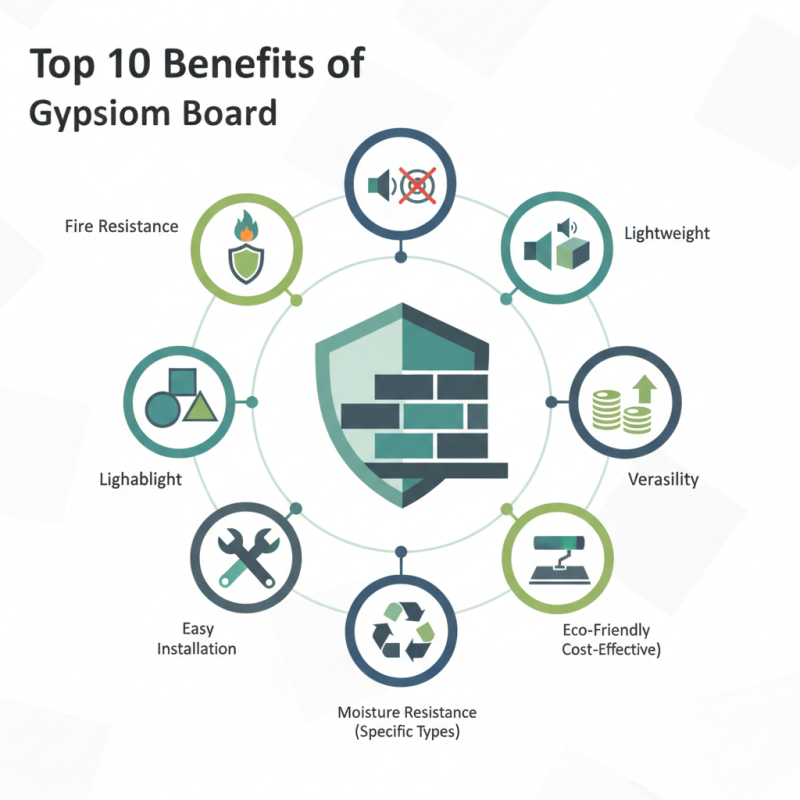
Top 10 Benefits of Using Gypsum Board for Your Projects?

Advantages of Gypsum Board in Construction Projects

Gypsum board, also known as drywall, offers numerous advantages in construction projects. One key benefit is its fire resistance. According to the Gypsum Association, gypsum board can delay the spread of flames due to its chemically bound water, which evaporates at high temperatures. This feature is particularly important in residential and commercial buildings.

Another advantage lies in its acoustic properties. Studies indicate that gypsum board can significantly reduce sound transmission between rooms. This makes it an excellent choice for offices and apartments, promoting a quieter environment. Furthermore, it is lightweight and easy to handle, resulting in lower labor costs. This aspect can be especially beneficial for large-scale construction projects.

Despite its many advantages, there are challenges that need attention. Gypsum board can be susceptible to moisture damage, leading to mold growth. Builders must ensure proper installation and moisture-resistant options in humid climates. Additionally, while it is an economical choice, the long-term durability may require consideration, especially in high-traffic areas. Balancing these factors is crucial to maximizing the benefits of gypsum board in construction.

Top 10 Benefits of Using Gypsum Board for Your Projects

Durability and Longevity of Gypsum Board as a Building Material

Gypsum board, known for its remarkable durability, is an essential material in modern construction. Reports indicate that it offers exceptional longevity, often lasting for over 50 years when installed correctly. Its resistance to cracking and warping under normal conditions contributes to this impressive lifespan. In fact, studies show that gypsum board can withstand temperature fluctuations better than many alternatives, making it an excellent choice for varied climates.

Another significant aspect of gypsum board's durability is its fire-resistant properties. Fire tests prove that it can delay the spread of flames, providing critical extra time during emergencies. Data from the National Fire Protection Association highlights that structures using fire-rated gypsum board can reduce damage costs significantly. Furthermore, its resistance to mold and mildew enhances its reliability in moisture-prone areas, ensuring that it maintains structural integrity over time.

While gypsum board has many advantages, challenges still exist. Improper installation may lead to damage, such as delamination or moisture intrusion. Ongoing training in installation techniques is vital for construction professionals, as even minor errors can compromise durability. Attention to detail during the planning and application phases can mitigate these risks and maximize the benefits of this versatile material.

Energy Efficiency Benefits of Using Gypsum Board

Gypsum board, a common building material, offers significant energy efficiency benefits. According to the U.S. Department of Energy, using gypsum board can improve a building's thermal performance. This is largely due to its inherent thermal mass, which helps stabilize indoor temperatures. The material can reduce heating and cooling costs by as much as 10% compared to conventional materials.

Another important aspect is moisture management. Gypsum board naturally absorbs excess humidity and releases it when the air is dry. This function can reduce the need for additional HVAC systems. The National Institute of Building Sciences states that effective moisture control can result in energy savings of up to 30%. However, while gypsum board provides these energy benefits, it is vital to consider appropriate installation and maintenance practices. Poor installation can lead to thermal bridging, counteracting its energy efficiency.

The lifecycle of gypsum board also supports sustainability. Reported data from various environmental studies indicate that gypsum can be recycled up to 20 times without significant loss of performance. However, it is essential to ensure that the recycling processes are efficient and do not contribute to additional waste. While gypsum board has many advantages, its effectiveness can only be maximized with careful planning and execution.

Top 10 Benefits of Using Gypsum Board for Your Projects

Benefit Description
Energy Efficiency Gypsum board has insulating properties that help maintain temperature and reduce energy consumption.
Fire Resistance The material is inherently fire-resistant, making it safer for building interiors.
Soundproofing Gypsum board can reduce noise transfer between rooms, enhancing acoustic comfort.
Cost-Effective It is generally less expensive than other wall materials, both in material and labor costs.
Easy Installation Installation is relatively straightforward, which can save on labor time and costs.
Environmentally Friendly Made from natural materials, gypsum board is recyclable and often contains recycled content.
Versatility Suitable for a variety of applications from residential to commercial construction.
Aesthetic Quality Provides a smooth surface that is easy to paint or apply finishes to.
Moisture Resistance Special formulations of gypsum board are available that resist moisture and prevent mold growth.
Durability Gypsum board is known for its durability and long lifespan in a variety of environments.

Fire Resistance Properties of Gypsum Board in Safety Applications

Gypsum board is often chosen for its fire resistance properties, making it a crucial material in safety applications. According to the Gypsum Association, gypsum board can withstand temperatures up to 1,000 degrees Fahrenheit. This capability helps slow the spread of fire, giving occupants more time to evacuate safely. In many building codes, the use of fire-rated gypsum board is mandated for protecting structural elements.


When integrating gypsum board into your project, consider the importance of correct installation. Gaps and improper sealing can diminish its fire resistance qualities. Ensure that joints are adequately covered and that materials meet the necessary fire rating standards. This will maximize safety and enhance the overall integrity of the structure.


Tip: Always tap into local building codes that relate to fire safety when selecting materials. Stay informed about the latest industry standards. A small oversight in material choice can lead to significant safety risks. Knowing more about fire ratings can guide your project effectively.

Cost-Effectiveness of Gypsum Board for Budget-Conscious Projects

Gypsum board has become increasingly popular among budget-conscious project planners. Its cost-effectiveness is one of its main advantages. The initial investment in gypsum board is often lower than alternative materials. This makes it an attractive option for homeowners and contractors alike. Additionally, gypsum board installation typically requires less labor time, translating into further savings on project budgets.

Many people overlook the speed of installation. Using gypsum board can significantly reduce project timelines. A quicker completion means less disruption and lower labor costs. It's important to acknowledge that mistakes can happen during installation. However, the simplicity of gypsum board allows for easier corrections. This quality can salvage a budget when unexpected issues arise.

While gypsum board offers numerous benefits, it’s essential to consider its limitations. For high-moisture areas, special types of gypsum board are necessary. This could lead to additional costs and may complicate planning. Understanding these nuances can help ensure that projects remain on budget while delivering quality. This makes gypsum board a solid choice for many, but careful consideration is vital.

Article Source: