
Steam turbine blades operate under demanding conditions: high rotational speed, heat, pressure, and repeated loading. A small defect can affect efficiency, vibration, or maintenance intervals. This makes supplier selection an engineering decision, not simply a price comparison. No shortlist is perfect.
The International Energy Agency’s Electricity 2024 report estimated global electricity demand would grow by about 4% in 2024, the fastest annual rate since 2007 outside major recovery periods. That outlook underscores the importance of dependable generation equipment across thermal, nuclear, and other steam-cycle applications. The IEA’s World Energy Outlook 2024 also examines how power-sector investment and changing generation mixes shape future system needs. These reports do not rank blade manufacturers; they provide context for the reliability demands buyers face.
This guide to 10 Best Steam Turbine Blade Suppliers Worldwide focuses on practical evaluation: material capability, manufacturing controls, dimensional accuracy, testing, documented references, and after-sales support. Buyers should verify each supplier’s claims against drawings, inspection records, and project-specific operating conditions. Ask about coatings and repair options, too. The right choice depends on the machine, steam conditions, and service history—not a polished brochure alone. Some comparisons remain difficult without comparable public data. That limitation deserves attention.
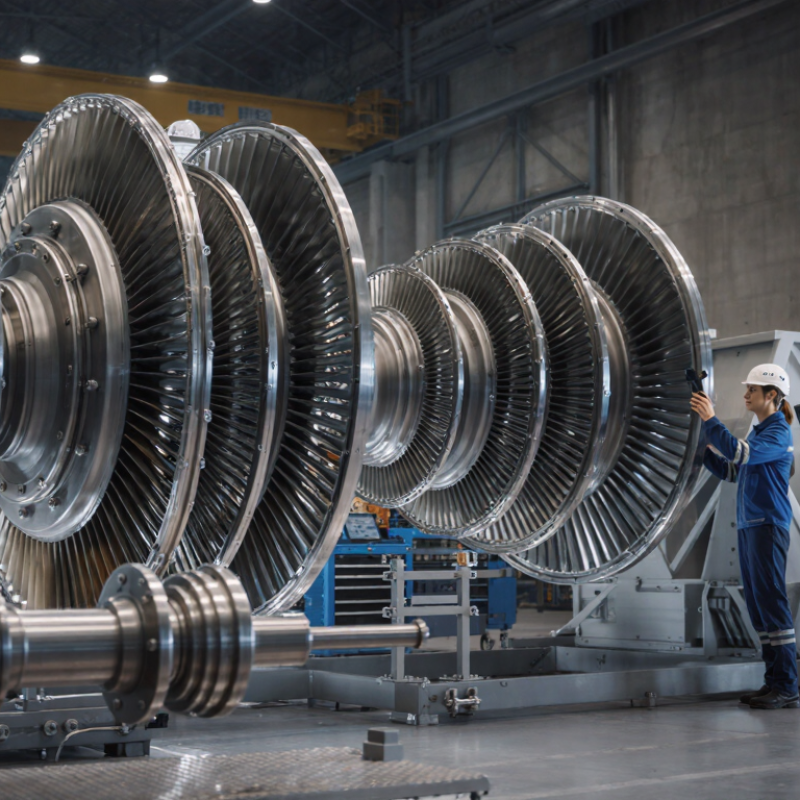
Steam turbine blades convert the energy of expanding steam into rotation. Fixed blades direct the flow, while rotating blades transfer its force to the rotor. Together, they form stages along the turbine shaft. Each stage is shaped for changing steam pressure and speed. A blade near the inlet may face hotter, faster steam than one near the exhaust. Small geometry differences matter. They affect efficiency, vibration, and how evenly the rotor turns.
These blades work in electricity-generating stations, combined heat and power plants, and industrial facilities that need process steam. In service, they face heat, centrifugal loading, and sometimes moisture droplets that can erode blade edges. Maintenance teams check for cracks, deposits, corrosion, and unusual vibration; inspection intervals depend on operating conditions. It is not just a matter of choosing a strong alloy. Blade shape, cooling needs, and fit within the turbine all count. Even careful inspections cannot predict every operating problem, and that uncertainty deserves attention. A tiny damaged area may be easy to miss until performance changes.
Steam turbine blades are shaped around the pressure, temperature, and flow conditions of each turbine stage. Engineers use thermodynamic calculations and computational fluid dynamics to estimate how steam will move across the airfoil. Small changes in curvature can affect efficiency, vibration, and heat loading. The root matters, too. It transfers centrifugal forces into the rotor, so its geometry must avoid stress concentrations. Nothing is purely theoretical. Engineers compare models with operating data, then revise dimensions where measurements disagree.
Manufacturing usually begins with forged or cast alloy stock, selected for strength, creep resistance, and corrosion performance. CNC machining forms the airfoil and attachment features, while grinding refines critical surfaces. Some designs use protective coatings, but coating choice depends on temperature and steam chemistry. Each blade is checked for dimensions, surface defects, and material properties. Balance and resonance tests help identify risks before assembly. Traceable inspection records are essential. A tiny nick can grow under repeated loading. Even careful processes are not perfect, and inspection cannot predict every service condition. That limitation deserves attention, especially when operating hours accumulate or maintenance intervals change.
When evaluating steam turbine blade suppliers, look beyond a polished catalogue. Ask how each blade’s alloy, heat treatment, and machining tolerances are verified. Request material certificates and inspection records tied to the specific production batch. Useful evidence may include dimensional reports, non-destructive testing results, and checks for surface cracks near roots and cooling passages. Details matter. Compare the supplier’s proposed profile and attachment design with your turbine drawings, operating speed, steam conditions, and maintenance history. A technically capable supplier should explain deviations clearly, not simply promise a perfect fit.
Experience is visible in practical questions. Can the supplier discuss erosion patterns, vibration concerns, or fatigue found during previous inspections? Ask for references from comparable turbine types and operating environments, then confirm what work was actually supplied. Check lead times, repair support, packaging, and how quality issues are handled. Request a sample inspection plan before placing an order. Small gaps count. Documents alone cannot prove long-term field performance, and supplier references may not match your duty cycle. That is easy to overlook. Have your engineering team review critical measurements and acceptance criteria, and record unresolved assumptions before approving manufacture. Even a thorough evaluation can miss something; the checklist needs a second look.
Use this scorecard to compare suppliers consistently. The weights below are suggested buyer priorities, not ratings of specific companies. Confirm requirements and evidence against the turbine design, purchase specification, and applicable codes.
| No. | Evaluation dimension | What to evaluate | Evidence to request | Suggested weight |
|---|---|---|---|---|
| 1 | Relevant turbine-blade experience | Experience with the required turbine type, blade stage, operating conditions, and replacement or repair scope. | Anonymized project references, scope descriptions, and evidence of comparable blade applications. | 15% |
| 2 | Material selection and traceability | Ability to supply the specified alloy and maintain traceability from incoming material through finished parts. | Material certificates, heat or batch traceability records, and chemical and mechanical test results as specified by the contract. | 12% |
| 3 | Manufacturing capability | Control of the required production route, blade profile, root geometry, tolerances, and surface finish. | Process flow, inspection plans, equipment capability information, and sample dimensional inspection reports. | 12% |
| 4 | Quality management and inspection | Documented quality controls, inspection hold points, nonconformance handling, and verification of finished blades. | Quality-system certificate where applicable, inspection and test plans, calibration records, and sample final documentation. | 12% |
| 5 | Engineering and application support | Ability to review drawings and operating data, assess fit and interfaces, and manage design changes responsibly. | Engineering review process, drawing-control procedure, technical query workflow, and change-approval records. | 10% |
| 6 | Testing and non-destructive examination | Availability of inspection and test methods appropriate to the material, manufacturing route, and purchase specification. | Test procedures, personnel qualifications where required, and sample reports for specified dimensional, material, and NDT checks. | 10% |
| 7 | Delivery and supply-chain control | Credibility of the proposed lead time, production planning, critical-subcontractor oversight, and export packing arrangements. | A milestone schedule, capacity statement, subcontractor-control process, and preservation and packing plan. | 8% |
| 8 | After-sales and repair support | Availability of technical assistance, failure investigation, repair options, and replacement-part support. | Warranty terms, service response process, repair capability details, and sample root-cause analysis reports where available. | 8% |
| 9 | Standards and contractual compliance | Ability to meet the stated technical specification and applicable regulatory or industry requirements; standards should be applied only where relevant to the scope. | A compliance matrix identifying each requirement as compliant, deviated, or not applicable, with supporting documents. | 7% |
| 10 | Total cost and commercial clarity | Evaluate the full delivered cost, scope exclusions, payment terms, warranty coverage, and potential lifecycle costs—not unit price alone. | Itemized quotation, assumptions and exclusions, delivery terms, warranty conditions, and validity period. | 6% |
| Total suggested weighting | 100% | |||
Scoring suggestion: Rate each criterion from 0 to 5 based on documented evidence, multiply by its weighting, and compare suppliers against the same specification. Verify references and certificates independently before award.
Ten leading steam turbine blade suppliers worldwide are best compared by engineering capability, not brochure claims. A credible supplier should document alloy composition, forging or casting routes, heat treatment, dimensional tolerances, and inspection records. Ask for blade-profile measurements and non-destructive testing results. These details matter: a small root-fit error can create vibration, wear, and costly downtime.
The IEA’s Electricity 2024 report estimates coal supplied about 35% of global electricity in 2023. Steam turbines also serve nuclear and other thermal plants, so blade demand depends on varied operating conditions.
A useful shortlist checks experience with the turbine’s stage, steam temperature, rotational speed, and operating history. Request case records for comparable units, including repair intervals and measured performance—not only claimed efficiency gains. Verify material traceability and the supplier’s quality-management process. Ten candidates may look similar on paper. Their field evidence often does not.
Tips: Share blade drawings, operating data, and failure photos before requesting a quotation. Ask how the supplier verifies profile accuracy and balances replacement sets. Confirm lead time, inspection scope, and warranty terms in writing. A low price can be tempting; I would still question it when testing details are vague. Supplier comparisons should remain cautious, since public performance data is rarely standardized across manufacturers.
Choosing among steam turbine blade suppliers starts with the duty, not the size of a catalogue. A steady-load unit and a machine that starts frequently face different fatigue demands. Share the operating speed, steam conditions, expected cycling, and outage window with each bidder. Small details matter. Ask how blade geometry and material choices suit those conditions, and request the assumptions behind the proposal.
Compare evidence, not just claims. Request applicable material certificates, dimensional inspection records, balancing results, and non-destructive testing reports. Ask for references involving similar steam conditions and turbine duty. Check whether the supplier can explain its inspection limits in plain language. Ask for evidence. A polished report is useful, but it cannot replace clear traceability from material receipt through final inspection.
Project fit also includes support after delivery. Compare realistic lead times, repair options, spare-blade availability, and the response process during an outage. Clarify what changes require customer approval and how technical questions are handled. A low price may hide assumptions about documentation or delivery; a higher quote may include work your project does not need. I would not treat any single score as decisive. Put the main requirements in a comparison sheet, then review gaps with the engineering and maintenance teams.