
China Best Alternating Pressure Mattress Supplier?

Choosing a China-based supplier for an Alternating Pressure Mattress takes more than comparing prices. Buyers should examine pump performance, cell construction, alarms, cleaning instructions, warranty terms, and service support. These details matter at the bedside, where a quiet pump and clearly labeled controls can make daily care easier.

The scale of the need is substantial. The U.S. Agency for Healthcare Research and Quality has reported that pressure ulcers affect about 2.5 million hospitalized patients annually in the United States. Clinical guidance from the European Pressure Ulcer Advisory Panel, National Pressure Injury Advisory Panel, and Pan Pacific Pressure Injury Alliance emphasizes matching support surfaces to individual risk and care needs. A mattress is not a substitute for assessment or repositioning.

Pressure-injury specialist Joyce Black’s work reinforces a practical point: support surfaces should be selected as part of an overall prevention plan, not as a stand-alone solution. That distinction is easy to overlook. For purchasers, it means asking suppliers for verifiable product specifications, testing documentation, and clear after-sales procedures—not relying on broad claims such as “medical grade.” This guide examines what buyers should verify when assessing Chinese manufacturers, including product design, quality controls, customization, and export experience. Some supplier information can be difficult to compare consistently, so careful questions matter.
China Best Alternating Pressure Mattress Supplier?

What Is an Alternating Pressure Mattress and How Does It Work?

China Best Alternating Pressure Mattress Supplier?

What Is an Alternating Pressure Mattress and How Does It Work?

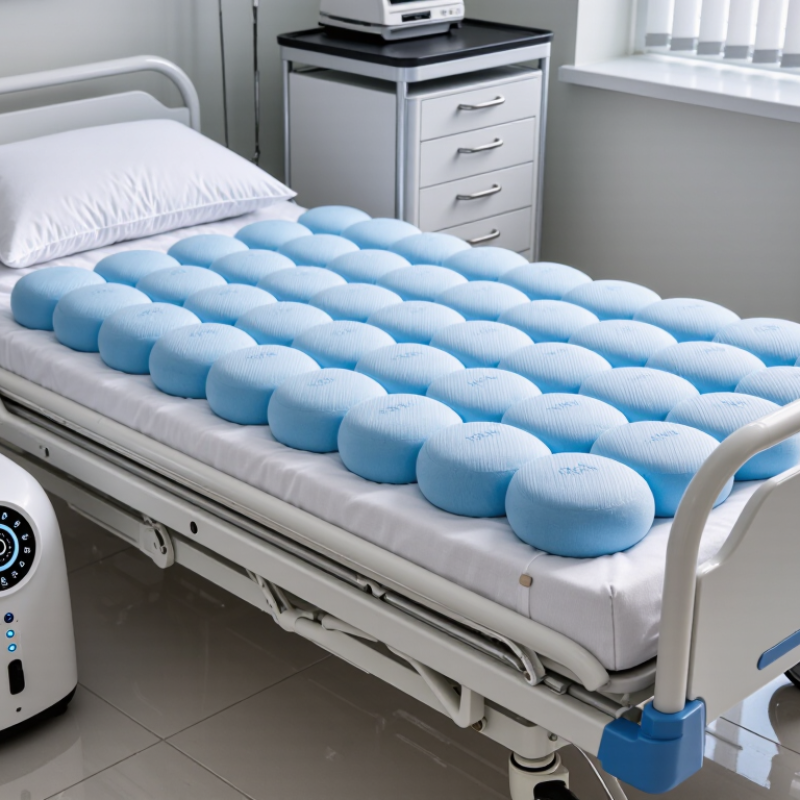
An alternating pressure mattress uses an electric pump to inflate and deflate connected air cells in a repeating cycle. As some cells soften, others support the body. This shifts pressure between contact points, such as the heels, hips, and shoulders. The gentle movement may help reduce prolonged pressure on one area, but it does not prevent every pressure injury or replace regular repositioning.

The pump’s cycle and mattress settings should suit the person’s size, mobility, and care needs. A mattress that feels too firm or too soft may cause discomfort. Check that the pump is running, hoses are connected, and the mattress is not bottoming out. Small setup details matter. I’ve seen people focus on the pump and overlook a kinked tube; it’s an easy mistake, and worth checking again. A clinician can help assess suitability, especially when skin changes or pain appear.

Tips: Keep the pump on a stable, ventilated surface, and listen for unusual noise. Follow the care instructions for cleaning and daily checks. Don’t rely on the mattress alone: inspect the skin and adjust position as advised. Alternating pressure can help, but comfort and fit still need attention.

Key Features and Applications of Alternating Pressure Mattresses

China Best Alternating Pressure Mattress Supplier?

Key Features and Applications of Alternating Pressure Mattresses

An alternating pressure mattress uses air cells that inflate and deflate in cycles. This shifts pressure across the body instead of loading the same areas continuously. A pump controls the cycle, while adjustable settings help caregivers match support to a person’s needs. The pump should run steadily, and tubing must stay clear of kinks. Small details matter.

Common features include washable covers, quiet pumps, secure cell connections, and controls that are easy to read. Some models use replaceable air cells, which can simplify maintenance. In care settings, these mattresses may support people who spend long periods in bed or have limited mobility. They are also used in home care, where room layout and pump noise can affect daily comfort.

But they are not a substitute for regular skin checks, repositioning, or clinical assessment. One limitation is that the cycling sensation may bother some users, especially during sleep. Care teams should check fit, settings, and skin condition over time, because the right setup can change.

How Alternating Pressure Mattresses Are Manufactured in China

Alternating pressure mattresses are built from more than air cells and a pump. In Chinese factories, production commonly starts with incoming checks on PVC or TPU film, fabric, tubing, and electrical components. Workers inspect thickness, surface defects, and connector fit before materials reach the assembly line. Small details matter.

Air-cell panels are shaped and joined using heat or radio-frequency welding, depending on the material and process. Technicians check weld lines for gaps, then connect the cells to an air manifold and control unit. The pump is tested for airflow, cycle timing, noise, and alarm response. A mattress may run through repeated inflation cycles to reveal slow leaks or uneven pressure. Not every defect is obvious at first.

Final inspection often includes a leak test, visual review, and a test under simulated load. Records for components and production batches help suppliers trace issues later. Buyers can ask how long each test runs and whether results are documented. Factory practices vary, and a neat sample does not guarantee every production unit will match it. That deserves a closer look.

How to Evaluate a Chinese Alternating Pressure Mattress Supplier

China Best Alternating Pressure Mattress Supplier?

How to Evaluate a Chinese Alternating Pressure Mattress Supplier

A reliable supplier should explain how its mattress system works, not just quote a low price. Ask for clear specifications covering mattress dimensions, materials, patient weight capacity, pump settings, and pressure-cycle timing. Request test reports and quality-control records, then check that the documents match the model being offered. A polished brochure is not proof. Details matter.

If possible, inspect a sample under realistic conditions. Listen to the pump in a quiet room, check that the cells inflate evenly, and test the controls and alarms. Ask how the supplier handles defects, replacement parts, staff training, and after-sales questions. Confirm production lead times and packaging details in writing. Response quality during early discussions can reveal how practical future support may be, though it is not a guarantee.

Tips: Compare samples using the same setup and checklist. Ask who performs final inspections and how results are recorded. Speak with previous buyers if available. One awkward point: a short trial may not reveal long-term wear, so keep asking about durability evidence and test methods.

China Best Alternating Pressure Mattress Supplier? - How to Evaluate a Chinese Alternating Pressure Mattress Supplier

Use this scorecard to compare suppliers against your intended market, product specification, and purchasing requirements. The weightings are suggested evaluation criteria, not rankings or claims about any particular supplier. Verify all certificates, test reports, and registrations for the exact product and legal manufacturer.

Evaluation Dimension Suggested Weight What to Evaluate Evidence to Request and Verify
Regulatory Compliance 18% Confirm the product’s intended use, classification, and regulatory pathway for each destination market. Requirements differ by jurisdiction and product configuration. Model-specific declarations and technical documentation; applicable conformity certificates and test reports; current certificate scope and validity. For the United States, distinguish FDA establishment registration or device listing from FDA clearance or approval—registration or listing alone does not mean FDA endorsement.
Product Performance 18% Assess the pump and mattress system against your written specification: operating modes, cycle settings, pressure adjustment, alarms, user controls, and compatibility with the intended bed and patient population. Product specification, user manual, model-specific functional test records, and sample evaluation results. Check that stated performance is supported by test methods and defined conditions; do not treat one specification as suitable for every patient or care setting.
Quality Management 16% Evaluate whether documented processes cover design changes, incoming materials, production inspection, nonconformities, corrective actions, and complaint handling. Quality-management-system certificate where applicable, verified with the issuer and checked for scope and expiry; audit summary; inspection procedures; sample corrective-action and complaint-handling records with confidential details removed.
Electrical and Product Safety 12% Review electrical safety, electromagnetic compatibility, alarms, labeling, and foreseeable-use risks for the complete pump and mattress configuration. Relevant, current test reports for the offered model and configuration. IEC 60601-series requirements may be relevant to medical electrical equipment; confirm the applicable standards and editions with the destination-market regulatory specialist or testing laboratory.
Manufacturing Capability 10% Check whether the supplier can consistently build the quoted design and manage production capacity, process controls, component sourcing, and change notifications. Facility details, production flow, capacity assumptions, process-control records, supplier-control procedures, and a written policy for notifying buyers of material or design changes. Verify whether the contracting party is the manufacturer or a trading company.
Traceability and Documentation 8% Confirm that each unit can be linked to production and inspection records, and that product labeling and documentation match the ordered model. Example serial-number or lot-traceability record; sample label, packing list, inspection report, and user manual; documented retention period and procedure for handling field safety issues or recalls.
Samples and Verification 8% Test a production-representative sample before approving a bulk order. Check fit, operation, alarms, cleaning instructions, packaging, and consistency with the agreed specification. Approved sample and signed specification; pre-shipment inspection plan with acceptance criteria agreed in advance; documented resolution process for defects or failed tests. Confirm whether the sample is made using normal production processes.
Commercial Transparency 5% Compare the full cost and terms, not only the unit price. Review tooling, spare parts, packaging, payment terms, lead time, Incoterms, and order-change conditions. Itemized quotation, written lead-time assumptions, warranty terms, spare-parts pricing, packaging details, and clearly identified contracting and payment entities. Confirm who is responsible for export documents and agreed inspection costs.
After-Sales Support 5% Assess access to technical support, replacement parts, training materials, warranty service, and a process for handling customer complaints. Written response and escalation process, parts availability policy, warranty procedure, troubleshooting guide, and training documentation in the languages needed for your market.
Total Suggested Weight 100% Score each supplier using the same evidence requirements and product specification. Treat missing or unverifiable documentation as an item requiring resolution before purchase.

Questions to Ask Before Choosing a Supplier

China Best Alternating Pressure Mattress Supplier?

Questions to Ask Before Choosing a Supplier

Before comparing prices, ask how the mattress handles pressure changes during a typical night. What cycle times are available, and can caregivers adjust them? Ask for the recommended user weight range and mattress dimensions. These details affect fit and performance. Ask plainly. A pump that sounds quiet in a showroom may seem louder beside a bed at night.

Request written information about materials, cleaning methods, and routine maintenance. How are air cells checked before shipment? What happens if a pump alarm sounds or a cell needs replacement? Ask whether spare parts are available and how quickly technical support responds. A clear answer is more useful than a broad promise. If possible, review a sample unit and check its controls, seams, and air hoses yourself.

Clarify the warranty period, what it covers, and how service requests are handled. Ask for product test records and instructions for setup and daily use. Supplier experience matters, but specific examples of quality checks matter more. I once assumed the lowest quote meant the same equipment; it did not. Compare the pump, mattress, service, and replacement costs together. No supplier will answer every question perfectly. Still, vague answers about safety, maintenance, or support deserve a second look.