
Top Gateway Transformer Suppliers for Global Buyers

Choosing a Gateway Transformer supplier is not just a price comparison. Buyers need equipment that matches the project’s voltage, frequency, capacity, insulation, and installation conditions. A mismatch can cause delays, extra engineering work, or costly changes on site. Details matter.

This guide helps global buyers compare suppliers using practical, verifiable criteria. It looks at product range, manufacturing capabilities, quality controls, testing documentation, delivery planning, and after-sales support. Buyers should request clear datasheets, routine test reports, applicable certifications, and references for projects with similar requirements. Check how a supplier handles customization, spare parts, warranty claims, and technical questions across time zones. Promises are useful, but written specifications and traceable records provide stronger evidence.

No supplier is right for every project. Not every supplier fits. Some excel at standard units and short lead times; others may be better suited to custom designs or demanding environments. Price still matters, but it should be weighed against operating conditions, maintenance needs, and the cost of delays. A low quotation can leave important details unresolved, and even a well-documented offer deserves careful review. Buyers should confirm that stated performance aligns with their project documents and local requirements before placing an order. The comparison may not produce a perfect answer. It can, however, make trade-offs easier to see. The supplier profiles that follow offer a starting point for informed evaluation, not a substitute for technical review.
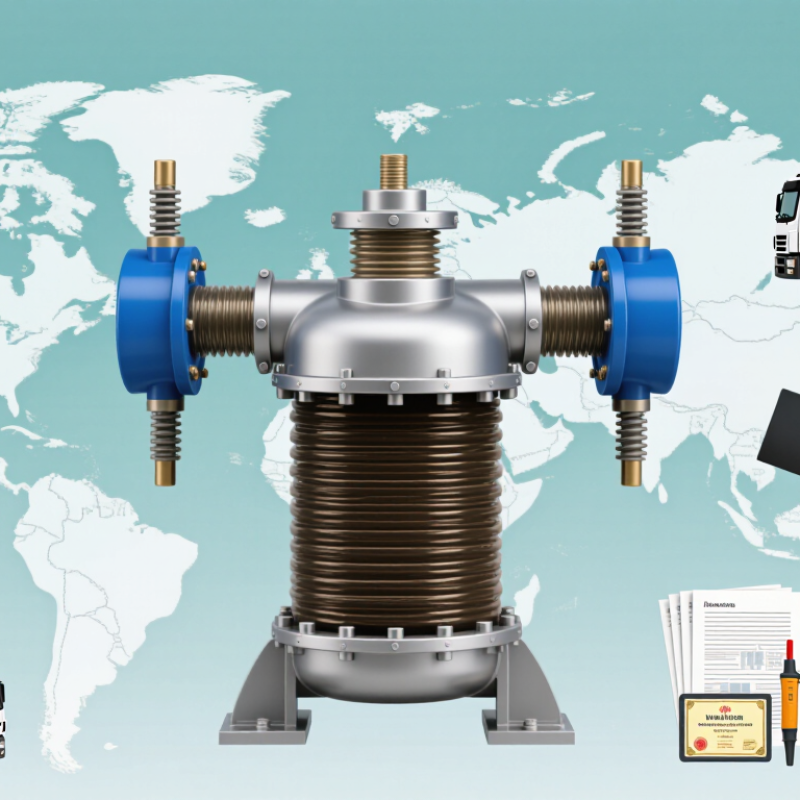
Top Gateway Transformer Suppliers for Global Buyers

What Gateway Transformers Are and How They Support Power Systems

Top Gateway Transformer Suppliers for Global Buyers
What Gateway Transformers Are and How They Support Power Systems

A gateway transformer connects two parts of a power system operating at different voltage levels. It may step voltage up for transmission or down for a facility, depending on where it sits. Its windings transfer electrical energy while providing separation between connected circuits. The exact meaning of “gateway transformer” can vary by project, so buyers should confirm the intended duty rather than rely on the label alone.

In a solar farm, for example, transformers can help connect inverter output to a higher-voltage collection network. At an industrial site, one may reduce incoming utility voltage for downstream equipment. That detail matters. Ratings, cooling method, insulation, and expected loading all affect dependable operation. Engineers also coordinate transformer characteristics with switchgear and protective relays, since the transformer alone does not manage every fault. Heat leaves clues. Regular checks for unusual temperature, noise, leaks, or changes in oil condition can reveal developing issues. Real operating conditions are rarely perfect; fluctuating loads and harsh weather can expose assumptions that looked fine on a design sheet.

Key Types, Ratings, and Design Features of Gateway Transformers

Gateway transformers connect transmission networks, renewable plants, industrial sites, and other major loads. Their first selection point is function: step-up and step-down units change voltage, while isolation designs separate circuits. Autotransformers can reduce size and cost where electrical isolation is unnecessary. Phase-shifting units help control power flow between interconnected networks. Each type answers a different system need.

The International Energy Agency’s 2023 report, Electricity Grids and Secure Energy Transitions, says annual grid investment must rise above US$600 billion by 2030. That expansion makes correct transformer ratings especially important. Buyers should check rated power in MVA, primary and secondary voltage, frequency, impedance, vector group, and short-circuit withstand. Easy to miss. Cooling choices such as ONAN or ONAF affect capacity under real operating conditions, while on-load tap changers help manage voltage variation. IEC 60076 provides core requirements for power transformers, but project specifications still need site-specific review. A catalog rating alone is not enough; ambient heat, altitude, harmonic loads, and future expansion can change the practical choice. Those assumptions deserve a second look.

Gateway Transformer Ratings & Design Features

Representative nominal AC grid-voltage levels used in transformer interface applications

How to read this chart: The bars show example nominal system voltages, not guaranteed transformer nameplate ratings. Actual voltage, power capacity, insulation level, vector group, cooling method, and tap range are selected to meet the project specification and local grid code.

Design considerations: Grid-interface transformers commonly use a specified impedance and winding arrangement, with an appropriate cooling system and on-load or off-circuit tap changing where required. Final design depends on load flow, fault levels, harmonics, and environmental conditions.

Leading Gateway Transformer Suppliers and Their Global Markets

Gateway transformer suppliers serve utilities, rail networks, renewable projects, and industrial facilities across distinct regional markets. Demand often follows grid expansion, replacement cycles, and local requirements for voltage, efficiency, and fire safety. Some suppliers focus on compact units for urban substations; others build large, custom designs for transmission links. Regional production can shorten delivery routes, but it does not guarantee faster commissioning.

Check test records. Factory acceptance tests, insulation data, and temperature-rise results help buyers compare equipment using verifiable evidence. Across Asia, manufacturing capacity supports broad sourcing options, while project specifications still vary widely. European and North American buyers may place added weight on lifecycle performance, traceability, and service access. Markets in Africa, the Middle East, and Latin America often require planning for heat, dust, transport, and grid conditions. Discuss spare parts early. Confirm rated power, impedance, cooling method, enclosure protection, and applicable test standards before comparing quotations. Supplier coverage can look impressive on a map; field support may be thinner than expected. That gap deserves a candid question.

Top Gateway Transformer Suppliers for Global Buyers - Leading Gateway Transformer Suppliers and Their Global Markets

The table compares major transformer-supplier market regions, not individual companies. It is an indicative overview rather than a sales-based ranking; product availability, export coverage, and certifications vary by manufacturer.

Supplier Market Common Product Focus Typical Applications Common Export Markets Key Buyer Checks
China Distribution, power, dry-type, and renewable-energy transformers across a broad range of ratings. Utilities, industrial facilities, commercial buildings, and renewable-energy projects. Suppliers serve domestic projects and export markets in Asia, Africa, the Middle East, and other regions, subject to product approvals. Verify destination-country certification, test reports, efficiency requirements, warranty terms, and delivery arrangements.
Germany and Central Europe Distribution and industrial transformers, including dry-type designs and equipment for demanding applications. Manufacturing, infrastructure, commercial buildings, and grid projects. European markets and selected international projects, depending on supplier scope and project specifications. Check applicable IEC requirements, efficiency class, acoustic limits, environmental conditions, and commissioning support.
Japan and South Korea Utility, power, and industrial transformers, with product ranges varying by manufacturer. Electric utilities, industrial plants, infrastructure, and energy projects. Domestic markets and selected projects across Asia and other regions. Confirm voltage and frequency compatibility, export documentation, local grid requirements, and service availability.
India Distribution and power transformers, including equipment for utility and industrial use. Grid expansion, substations, infrastructure, and industrial power supply. Domestic demand is substantial; some manufacturers also pursue projects in Asia, Africa, and the Middle East. Review applicable national or IEC standards, guaranteed losses, factory acceptance testing, and project references.
North America Utility, distribution, and dry-type transformers designed for regional grid and installation requirements. Electric utilities, data centers, commercial facilities, and industrial sites. Primarily North American projects, with international supply depending on product design and approvals. Check applicable IEEE or regional requirements, utility specifications, listing or certification needs, and lead time.

Standards such as IEC 60076 and IEEE C57 apply to different transformer designs and markets. Buyers should confirm the exact standard, edition, test scope, and required local approvals for each project.

How Global Buyers Evaluate and Compare Transformer Suppliers

Global buyers comparing gateway transformer suppliers should start with the site, not the catalogue. Record rated voltage, capacity, frequency, impedance, cooling method, and expected load profile. Then confirm ambient temperature, altitude, humidity, and available installation space. Small mismatches can become expensive after delivery. Ask suppliers to explain how their proposed designs meet each requirement. Request drawings, guaranteed loss figures, temperature-rise limits, and routine-test records. Do not compare prices until the scope is aligned. A lower quote may exclude accessories, commissioning support, or export packing.

Check the details.

Review how each supplier controls quality across materials, winding, assembly, and final testing. Look for traceable serial-number records and a clear process for handling deviations. For a gateway unit, verify bushing positions, cable entry, protection devices, and tap-changer range against the site layout. Ask who answers technical questions after shipment and how spare parts are identified. Lead time should include drawing approval and inspection windows, not just factory completion. One awkward truth: buyer checklists can overlook the people who maintain the unit. Discuss access, lifting points, manuals, and service response before placing an order. No supplier is perfect. Compare documented performance, communication, delivery risk, and lifecycle cost together.

International Standards, Procurement, and After-Sales Support

For global gateway transformer purchases, standards alignment is more than a certificate attached to a quotation. Buyers should confirm the applicable IEC 60076 or IEEE C57 requirements, then match them to the project’s voltage, cooling, insulation, and testing specifications. Requirements can differ by market. A supplier’s declaration alone may not resolve those differences.

The International Energy Agency’s 2023 report, Electricity Grids and Secure Energy Transitions, says annual grid investment needs to exceed USD 600 billion by 2030, roughly double current levels. That pressure makes clear procurement records valuable: request material traceability, routine and type-test reports, dimensional drawings, and a factory acceptance test plan before shipment. Check that report values match the ordered unit, not a similar model. Small mismatch, big delay.

After-sales support should be written into the contract, not left to a friendly email. Define commissioning assistance, response windows, spare-part availability, and escalation contacts across time zones. Ask how the supplier handles an unexpected temperature rise or a damaged bushing, and which diagnostic records are needed. A practical handover includes clear maintenance intervals and site-ready manuals. Paperwork can still be imperfect; buyers should verify revisions and translations before dispatch.