How to Choose the Best Sodium Battery for Your Needs
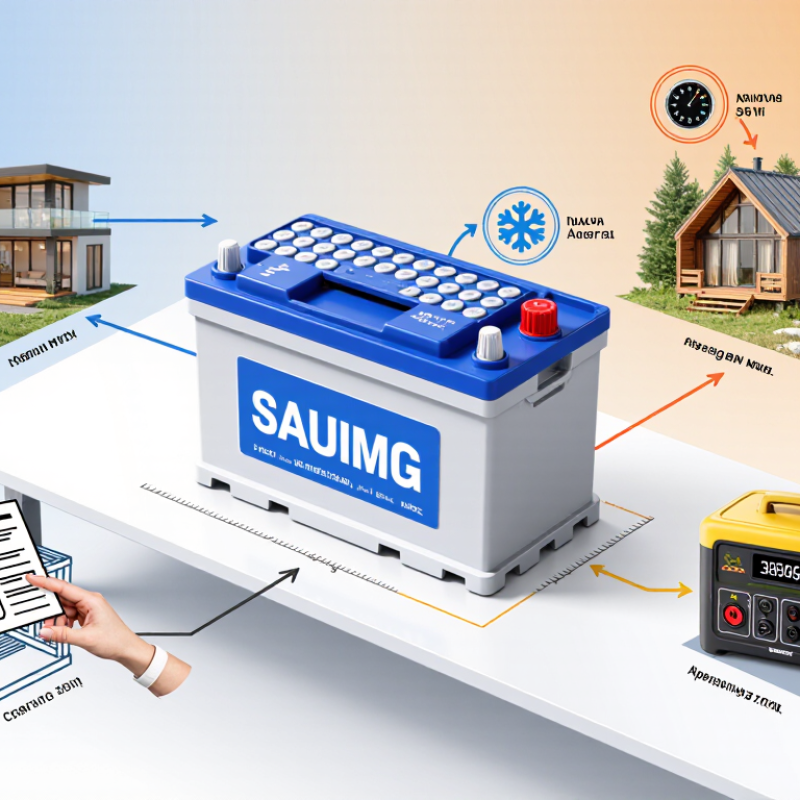
Choosing the right Sodium Battery starts with the job it must do. A home backup system, an off-grid cabin, and a portable power station place different demands on storage. Write down the load, expected backup time, available space, and operating temperatures before comparing models. Small details matter. A battery that fits beneath a workbench may still lack the capacity to run a refrigerator overnight.
Check usable capacity, continuous and peak power, cycle-life test conditions, charging limits, and warranty terms. Ask whether quoted capacity is nominal or usable, and compare systems on the same basis. Sodium-based batteries can offer advantages in material availability and performance in certain cold conditions, but results vary by design and operating environment. They are not automatically cheaper, lighter, or better than lithium alternatives. That is worth remembering.
Installation requirements deserve equal attention. Confirm inverter compatibility, ventilation guidance, monitoring features, and the manufacturer’s stated temperature range. For a cabin, for example, winter charging limits may matter more than a headline capacity figure. Look for clear technical documentation and independent test data where available; marketing claims alone are not enough. If specifications are missing, treat that as a reason to ask questions, not to guess. Some comparisons remain imperfect because products may use different test methods. This guide explains how to weigh those trade-offs, match a battery to real usage, and avoid paying for features your system will not use. The best choice is the one whose verified performance, installation needs, and long-term cost fit your situation.
Define Your Application and Battery Requirements
Start with the job, not the chemistry. Is the battery powering a remote sensor, a workshop, or a home backup system? Write down peak power, daily energy use, backup hours, charging windows, and available space. A pump may need a brief surge; a backup cabinet may need steady output overnight. The IEA’s 2024 Batteries and Secure Energy Transitions report says global battery storage capacity must grow sixfold, to 1,200 GW by 2030, in its net-zero pathway. That growth makes careful application-specific sizing essential.
For a sodium-ion option, compare usable energy, continuous and peak power, round-trip efficiency, cycle life, operating temperature, and warranty terms. Ask for test conditions, not just headline figures: capacity can change with temperature, discharge rate, and depth of discharge. The U.S. Department of Energy’s 2022 Grid Energy Storage Technology Cost and Performance Assessment evaluates storage using measures such as duration, efficiency, and lifetime. Use those same measures when comparing proposals. A spreadsheet still misses a frosty morning.
Tips: Estimate your real load from meter readings or equipment labels, then add a sensible reserve for startup surges and aging. Confirm the battery’s usable kWh at your site’s lowest expected temperature. Measure twice. If the application is still uncertain, record a week of demand before choosing a system.
Compare Sodium-Ion Battery Chemistries and Performance
Choosing a sodium-ion battery starts with its chemistry, not just its advertised capacity. Layered oxide cells can offer relatively high energy density, making them worth considering where space and weight matter. Their performance depends on the specific materials and cell design, so one data sheet cannot represent every product. Polyanion chemistries often emphasize structural stability and long service life, though they may store less energy per kilogram. Prussian blue analogue cells can support fast ion movement and practical charging rates, but moisture control and manufacturing quality matter.
Look beyond a single headline number. Compare usable capacity, charge rate, cycle-life test conditions, and performance across the temperatures your system will actually face. A battery in a cool garage may behave differently from one in a sun-warmed utility cabinet. Ask whether cycle-life figures assume shallow daily use or repeated deep discharges. Details like these change the comparison. No chemistry wins everywhere.
I would not select a cell from chemistry alone; that is an easy mistake. Check independent test results, operating limits, and the supplier’s warranty terms. Also consider inverter compatibility and the pack’s thermal management. If your priority is backup power, dependable cycling may matter more than maximum energy density. For mobile equipment, size and weight may carry greater importance. Sodium-ion technology is evolving, so published performance can vary, and some specifications deserve careful questioning. A little uncertainty is useful.
Check Capacity, Power, Charging, and System Compatibility
Capacity is more than the amp-hour figure on a product sheet. Compare usable watt-hours at your system voltage, then account for reserve capacity, temperature, and the battery’s low-voltage cutoff. Estimate your daily use from actual loads: a 60-watt router running for ten hours needs about 600 watt-hours, before conversion losses.
Numbers need context.
Next, check continuous and peak power. A refrigerator may use modest power while running but draw more when its compressor starts. Choose a battery and inverter that can handle both demands, not just the average load. Charging matters too. Confirm the battery’s permitted charging current and temperature range, then compare them with your solar controller, charger, or vehicle charging system. Cold-weather limits are easy to overlook.
Finally, verify system compatibility before buying. Match nominal voltage, inverter requirements, and battery-management-system settings; check whether communication links are required. For multiple batteries, confirm approved series or parallel arrangements rather than assuming they will work. A connector that fits proves very little. It is tempting to compare capacity alone, and I would still want to see the full datasheet before choosing. One awkward detail can outweigh an attractive headline rating.
Evaluate Safety, Lifespan, Cost, and Environmental Impact
Choose a sodium battery around its actual job: a home backup cabinet, a cold-weather site, or a vehicle with limited space. Safety depends on the full cell and pack design, not sodium chemistry alone. Check independent test results, thermal-management details, and warranty conditions. Ask how the battery behaves during charging in cold weather. Small details matter.
For lifespan, compare cycle-life claims at the same depth of discharge and end-of-life threshold. A headline cycle count is not a fair comparison otherwise. The International Energy Agency’s 2024 Global Critical Minerals Outlook places sodium-ion cell energy density at roughly 90–160 Wh/kg, generally below leading lithium-ion cells. That difference can mean a larger, heavier pack.
Cost claims need similar care: compare installed cost, usable capacity, and replacement assumptions, not cell prices alone. Sodium is abundant, but that does not make every battery automatically greener. Manufacturing energy, hard-carbon sourcing, and recycling pathways all affect its footprint.
The IEA also tracks sodium-ion as an emerging chemistry; production plans are not the same as proven output. Be cautious. A datasheet can look reassuring, yet real-world performance may vary.
Choose a Battery That Fits Your Priorities and Conditions
How to Choose the Best Sodium Battery for Your Needs
Choose a Battery That Fits Your Priorities and Conditions
A good sodium battery is not simply the one with the largest capacity. Match its usable energy, continuous power, and charging limits to your daily load. A cabin running lights and a refrigerator needs different output from a workshop starting a motor. Check the datasheet for usable capacity, cycle-life test conditions, operating temperature, and warranty. Ratings can look impressive; test conditions may not match your winter shed.
The IEA’s 2024 Batteries and Secure Energy Transitions report places sodium-ion energy density at roughly 90–160 Wh/kg, below many lithium-ion options. That difference matters when space or weight is tight, but may matter less in a stationary system. Compare total installed cost, not cell price alone. Confirm inverter compatibility and cold-weather charging limits. Chemistry alone does not guarantee performance.
Tips: Measure first. List peak loads, daily watt-hours, and the coldest expected temperature. Ask for test data at your intended temperature, not only room temperature. If a supplier cannot clearly explain usable capacity or cycle-life conditions, pause and compare alternatives. I would not choose on price alone; even careful estimates can miss real-life surges.

