
Buying Concrete Screws in bulk can lower unit costs and keep a job moving, but a low price alone tells little. The right choice depends on the concrete, the fixture, and the conditions at the site. A screw that works well in a dry indoor wall may not suit a damp exterior location. Details matter.
Before placing a large order, buyers should compare diameter, length, head style, drive type, and corrosion protection. They should also confirm the required pilot-hole size and installation method against the product’s instructions. A small sample order can reveal practical issues, such as a bit that slips or packaging that slows down crews. Test it first. Bulk purchasing also calls for checking stock consistency, delivery timing, and whether replacement quantities will remain available. Ask for clear product specifications, and review relevant test information where the application requires it. For critical structural work, consult a qualified professional rather than relying on a product description alone.
This guide covers seven useful checks, from matching screws to the base material to assessing suppliers and storage needs. Not every project needs the most expensive option, and not every advertised feature adds value. I have seen purchasing plans focus too heavily on price; that can be an easy mistake to repeat. Careful comparisons help buyers balance cost, performance, and dependable supply before committing to a large quantity.
Before ordering concrete screws in bulk, identify the base material and the forces each anchor must resist. Concrete strength, cracked or uncracked condition, and member thickness all affect design capacity. ACI 318 Chapter 17 provides requirements for evaluating anchors under tension and shear. Check the applicable edition and the screw’s published qualification data; do not assume every screw has the same design values.
Picture a wall bracket near a slab edge. The screw may face outward pull, downward shear, or both. Edge distance, spacing, embedment, and installation details can change performance. Small details matter. Use the manufacturer’s tested data and Chapter 17 checks to confirm the application, and involve a qualified design professional when loads or site conditions are uncertain. A strong-looking installation is not proof of adequate capacity.
For a bulk purchase, match the exact screw type, diameter, and embedment to the approved design before comparing quantities or prices. Keep the product documentation with the project records, and verify that crews can drill and install each anchor as specified. Do not guess. A spreadsheet may appear complete while overlooking cracked concrete or a reduced edge distance. Recheck the assumptions against actual drawings and site conditions before placing the order.
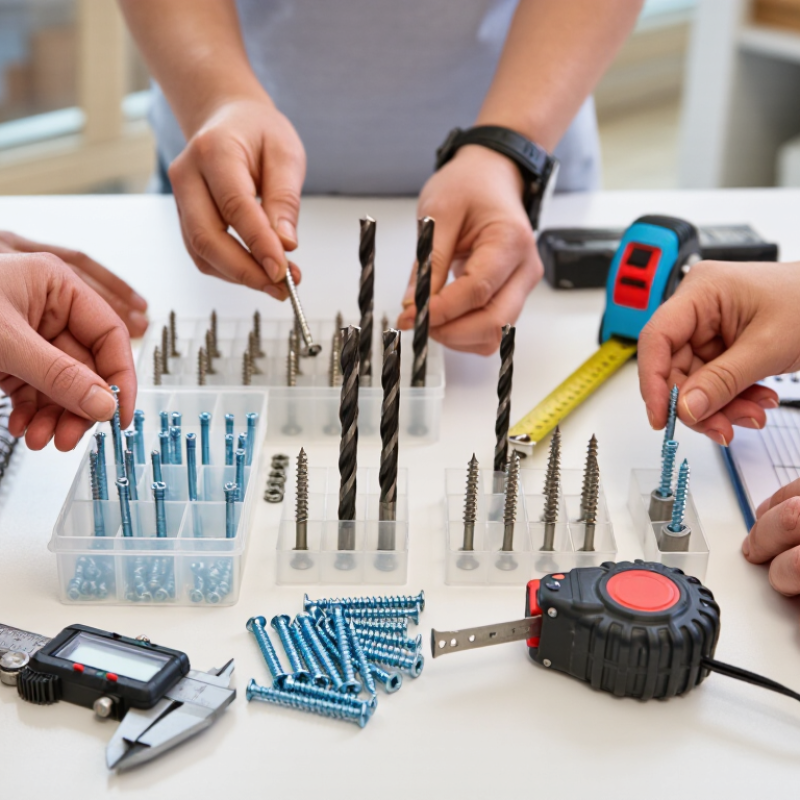
When buying concrete screws in bulk, compare the screw diameter with its specified pilot-hole bit. A common 3/16-inch screw typically calls for a 5/32-inch masonry bit. A common 1/4-inch screw typically calls for a 3/16-inch bit. Confirm the product’s installation instructions before ordering; sizes can vary by screw design. The bit must match.
For a large job, check that every carton lists the same diameter and required bit size. Mixing sizes can slow installation and leave holes that are too loose or difficult to drive. Keep a labeled sample screw beside the drill bits, and test a few holes in the actual concrete. Dust, aggregate, and worn bits can affect fit. Small details matter.
Bulk pricing is useful, but count the planned holes and allow a modest spare quantity for damaged screws or misplaced pieces. Also check screw length against the material being fastened and the required embedment depth. A larger screw is not automatically stronger for every application. I have seen crews assume the bit size from memory; that shortcut can waste a box of hardware. Verify it in writing.
When buying concrete screws in bulk, do not compare diameter and price alone. Check the product’s ICC-ES Evaluation Service Report (ESR) for the exact screw length, effective embedment, minimum edge distance, and spacing. These values can change with screw diameter, concrete strength, and whether the concrete is cracked. The ICC-ES AC193 acceptance criteria cover mechanical anchors in concrete; an ESR records the qualified installation conditions and design values. Read the tables, not just the report’s front page. Small print matters.
ACI 318-19 Chapter 17 also treats embedment, edge distance, spacing, and concrete condition as inputs to anchor design. A deeper screw does not automatically make a safe substitution if a nearby edge or another fastener limits capacity. Picture a row of screws near a slab corner: the specified spacing may not fit the layout, even when the screws themselves look identical. Before placing a bulk order, compare the ESR’s minimums with the actual hole pattern and concrete thickness, then confirm the specified installation method. Keep the report with purchasing records. Easy to overlook. ESR tables are product-specific, so do not transfer one screw’s values to another merely because both are labeled for concrete.
Tip 1: Start with exposure, not carton price. ASTM B633 classifies electrodeposited zinc coatings on steel by service condition and coating thickness. Its service-condition levels range from mild indoor exposure to severe exposure, with thicker coatings specified for greater protection. A bright finish alone tells you little. For screws near damp slabs, road salt, or wash-down areas, ask for the exact coating designation and product data.
Tip 2: Match the class to the actual site. A dry interior may need less protection than a garage entrance exposed to wet tires and de-icing salts. ASTM B633 describes a coating; it does not guarantee that every fastener will survive every concrete environment. Check that the stated class applies to the screws themselves, including heads and threads. That detail matters. Confirm whether supplementary treatments are included, since they can affect corrosion performance.
Tip 3: Before ordering in bulk, request the standard, service-condition class, nominal coating thickness, and lot traceability in writing. Inspect samples after storage, too. Condensation inside cartons can leave rust marks before installation. Color can mislead. For aggressive exposure, ask a corrosion specialist whether zinc-coated screws are suitable or another system is needed. It is worth checking twice.
Tip 1: Before ordering a pallet, request the ICC-ES evaluation report and match its listed screw diameter, length, and installation conditions to your plans. AC193 documentation is useful only when it applies to the exact anchor being supplied. Check lot labels, coating details, and traceability records. Keep a sample carton. It helps.
Tip 2: Compare cost per installed anchor, not price per screw. Add drill bits, washers, labor, expected waste, and time spent cleaning holes. For example, a lower unit price may disappear if installers need extra bits or reject damaged screws. Track actual installation time on a small trial lot before committing to a large purchase.
Tip 3: Inspect a few cartons from different parts of the shipment. Look for bent threads, mixed sizes, torn packaging, and inconsistent labels. Record the lot numbers and keep the supplier’s report with purchase records. Bulk buying can reduce handling costs, but only if inventory stays usable. I would still allow for some waste; jobsite conditions rarely match a spreadsheet exactly.
Illustrative example only—not a market quote. The chart assumes material costs of $0.95, $0.72, and $0.62 per anchor for 100-, 500-, and 1,000-anchor lots, plus $0.10 for consumables and $1.20 for installation labor per anchor. Verify the product’s applicable ICC-ES AC193 evaluation report and installation requirements before comparing quotes.
Compare the full installed cost—not just the bulk unit price. Confirm that the anchors in the lot match the evaluated product and that the specified diameter, embedment, concrete conditions, and installation method suit your project.