What Are the Best CNC Milling Machines in China?

Choosing among China’s Cnc Milling Machines means looking beyond a low purchase price. Buyers need to compare machining accuracy, spindle performance, control systems, service access, and the cost of keeping a machine running. A polished brochure can make every model look capable. The details matter more.

Grand View Research estimated the global CNC machine market at US$83.99 billion in 2023 and projected a 6.3% compound annual growth rate from 2024 to 2030. This figure covers CNC machines broadly, not milling machines alone or Chinese suppliers specifically. It signals a growing market, but it cannot identify the best machine for a particular workshop. That requires checking specifications against real parts, materials, tolerances, and production volumes.

Manufacturing-systems scholar Yoram Koren described reconfigurable systems as “designed at the outset for rapid change in their structure.” That idea offers a useful lens for comparing mills: flexibility has value when jobs change, but it should not be mistaken for proven reliability. Ask for a test cut. Inspect the surface finish. Confirm local support and spare-part availability. Then compare those findings with the machine’s quoted price and published specifications. Small differences count.

This guide examines Chinese CNC milling options through practical criteria, including machine construction, accuracy claims, controller choice, and after-sales service. No single model suits every shop. And a specification sheet is not a shop-floor result.
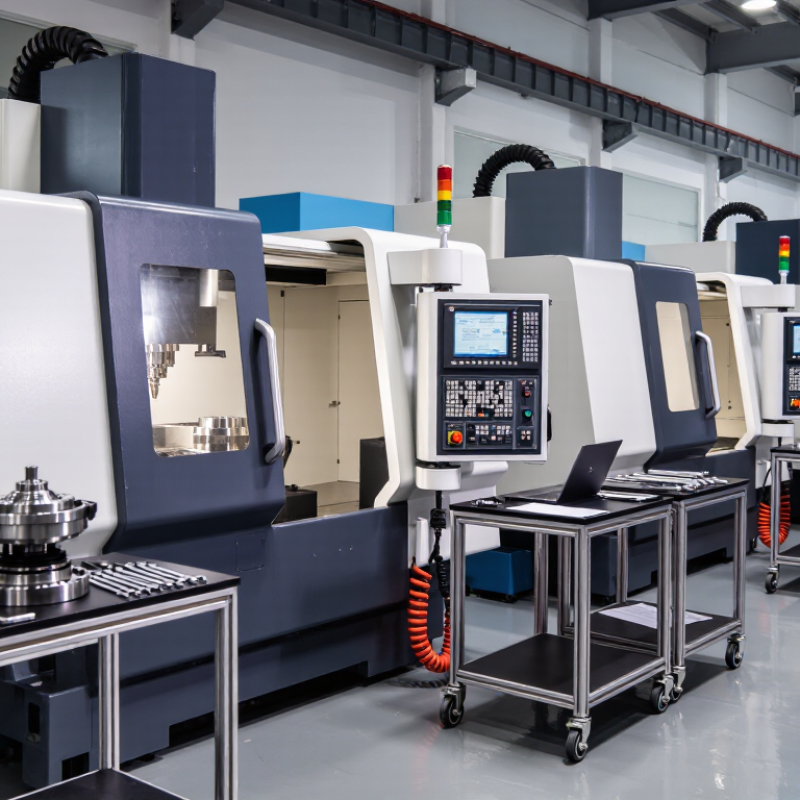
What Are the Best CNC Milling Machines in China?

What CNC Milling Machines Are and How They Work

A CNC milling machine shapes metal or plastic by rotating a cutting tool against a secured workpiece. CNC means computer numerical control: programmed instructions guide the machine’s movements. The operator chooses a cutter, fixes the material in a vise or fixture, and sets the work coordinates. Then the spindle turns. The workpiece or tool moves along programmed axes, removing material in controlled passes.

A basic three-axis machine moves left to right, front to back, and up and down. Additional axes can tilt or rotate the workpiece, allowing more complex surfaces to be cut. CAD software defines the part, while CAM software converts its geometry into tool paths and machine instructions. Those instructions control feed rate, spindle speed, depth of cut, and tool changes. Small details count. A loose fixture or incorrect tool offset can shift a hole by a fraction of a millimeter.

Before cutting, experienced operators check the setup and often run a simulation or cautious dry run. These steps help reveal collisions and programming errors, but they cannot predict every vibration or material variation. During machining, coolant may carry away heat and chips, while inspection confirms dimensions with gauges or measuring equipment. The process is precise, but not automatic in the human sense; good results still depend on sound setup, suitable tooling, and careful judgment.

Main Types of CNC Milling Machines Made in China

Chinese-made CNC milling machines generally fall into several practical types. Vertical machining centers suit compact parts, mold plates, and routine drilling. Their spindle approaches the work from above, making setup and chip inspection straightforward. Horizontal machining centers use a side-facing spindle and often support pallet changes. They are useful for multi-face cutting and longer production runs. Simple distinction.

Five-axis machines tilt or rotate the workpiece, reaching angled surfaces with fewer setups. Gantry mills handle large panels and heavy components, while bed-type mills provide rigid support for sizable workpieces. Features vary widely between suppliers, so labels alone can mislead. Check the working envelope, spindle torque, positioning accuracy, and test-cut results. The International Federation of Robotics’ World Robotics 2024 report recorded 276,288 industrial robot installations in China in 2023, about 51% of the global total. This reflects a substantial automation base, though it does not measure milling-machine quality.

Tips: Match the machine to the part, not just its advertised axis count. Ask for a sample cut in your material, then inspect surface finish and dimensional repeatability. A five-axis model may save setups, but it can add programming and maintenance demands. Not always better.

What Are the Best CNC Milling Machines in China? - Main Types of CNC Milling Machines Made in China

Machine Type Typical Configuration Suitable Workpieces Main Advantages Key Selection Considerations
Vertical Machining Center (VMC) Vertical spindle, usually 3-axis; some models add a rotary table or additional axes. Plates, brackets, housings, molds, and general-purpose prismatic parts. Versatile setup, straightforward workpiece access, and a broad range of tooling and operation options. Check table size, spindle speed and torque, tool capacity, axis travel, and whether the workpiece needs multiple setups.
Horizontal Machining Center (HMC) Horizontal spindle, commonly with a rotary indexing table or pallet system. Box-shaped components, multi-sided parts, and production work requiring access to several faces. Can machine multiple sides with fewer reclampings; chip evacuation is often favorable in deep cavities. Consider pallet size, indexing capability, fixture design, floor space, and the cost of the complete production setup.
Gantry or Bridge-Type CNC Milling Machine Large work area with a spindle head supported by a bridge or gantry structure; available in different axis configurations. Large plates, dies, molds, structural components, and other oversized workpieces. Provides a large machining envelope and can accommodate bulky parts that do not fit standard machining centers. Assess usable travel, workpiece loading, structural rigidity, foundation requirements, and accuracy across the full work area.
Bed-Type CNC Milling Machine Rigid bed construction with a moving table, column, or milling head, depending on the design. Heavy components, long parts, and machining tasks that need a rigid machine structure. Designed for substantial workpieces and can offer a stable platform for demanding cutting operations. Compare table load capacity, spindle power and torque, axis travel, machine footprint, and the intended material-removal rate.
CNC Turret Milling Machine Vertical milling head mounted on a column, with CNC-controlled axes varying by model. Repair work, prototypes, small batches, and relatively simple milling operations. Often offers a compact layout and flexible manual-style access while adding CNC positioning and control. Verify which axes are CNC-controlled, the available travel, tool-changing method, and suitability for the required production volume.
5-Axis CNC Milling Machine Three linear axes plus two rotary axes, commonly integrated in a trunnion-table or swiveling-head arrangement. Complex contoured parts, impellers, aerospace-style components, and parts with angled or multiple surfaces. Can machine several orientations in one setup and reach features that are difficult to produce on a 3-axis machine. Review rotary-axis travel, workpiece clearance, control and programming needs, calibration requirements, and operator experience.

Specifications and available configurations vary by model. Compare machines using the actual workpiece dimensions, materials, tolerances, production volume, and required operations.

Key Features for Comparing Chinese CNC Milling Machines

When comparing Chinese CNC milling machines, start with the parts you plan to cut. A compact aluminum bracket needs different capacity from a steel mold. Check X, Y, and Z travel, table dimensions, and rated load against your largest workpiece and fixtures. A machine may offer generous travel yet leave little room for a vise or tool clearance. Measure twice.

Spindle power and speed should suit the material and cutter, not just look impressive on a specification sheet. For steel, rigidity, low-speed torque, and stable cutting matter. For aluminum, higher speed and effective chip removal may be more useful. Ask how accuracy is specified, including test conditions and thermal stabilization. Numbers need context.

Compare the control interface, tool-change time, coolant system, guarding, and chip removal. Request a sample cut or acceptance test using a representative part, then check dimensions and surface finish with suitable instruments. That matters.

Installation support, training, spare-part availability, and response times all affect uptime. These details can vary by configuration, so confirm them in writing; a standard-looking option may not be included.

Leading Chinese Manufacturers and Their Machine Ranges

Chinese CNC manufacturers often divide their milling ranges by workpiece size, axis count, and production volume. Compact vertical machines suit small components, toolrooms, and limited floor space. Mid-size models handle general job-shop work, including steel plates and machine housings. Larger vertical and horizontal centers support heavier cuts and longer production runs. Some suppliers also offer five-axis systems for complex parts, though capability varies by configuration.

Catalog categories can look cleaner than factory reality. A machine’s usable travel, spindle torque, and tool capacity matter more than its label. Check sample-part results, positioning data, service coverage, and the stated accuracy conditions. Ask whether quoted specifications apply under your actual material, tooling, and duty cycle. Fit matters.

Tips: Compare machine ranges using your own part drawings and cutting requirements. Request a test cut on representative material, and inspect the finished surface and measured dimensions. Confirm installation needs, control options, and spare-parts availability in writing. A low purchase price may not reflect operating costs. That comparison is easy to miss. Manufacturers may describe similar models differently, so verify each detail before choosing.

CNC Milling Machine Configurations Commonly Available in China

A comparison of common controlled-axis configurations across major milling machine types.

Three-axis machines suit many standard milling tasks; four- and five-axis configurations can machine more faces or complex geometries with fewer setups. Actual options vary by machine model.

How to Choose a CNC Milling Machine for Specific Applications

Choosing a CNC milling machine starts with the part, not the machine’s maximum specifications. For aluminum housings, a high-speed spindle and effective chip evacuation can shorten cycles. For steel components, prioritize rigidity, torque at low speeds, and thermal stability. Small parts need speed. Large plates need travel and support. Check the actual work envelope with fixtures installed, not just the catalog dimensions.

Then match the machine’s axes and tooling to the geometry. A three-axis mill suits many prismatic parts; angled features may justify a fourth or fifth axis, but add setup and programming demands. Compare spindle speed, tool capacity, probing options, coolant delivery, and chip handling against real production tasks. A machine that cuts a sample part quickly may still struggle with a full shift of repeat production. That distinction is easy to miss.

Automation also deserves attention. The International Federation of Robotics reported 541,302 industrial robot installations worldwide in 2023, with Asia accounting for about 70% of new installations. This signals growing automation, not a requirement to buy a robot. If unattended machining matters, assess pallet access, tool-change reliability, and recovery from tool breakage. Ask for a test cut using your material, cutter, and tolerance targets. One assumption worth challenging: more axes do not automatically mean better output. The right machine is the one your operators can set up consistently, with support and spare parts available when production gets tight.