What Are the Best Machine Tools for 2026?

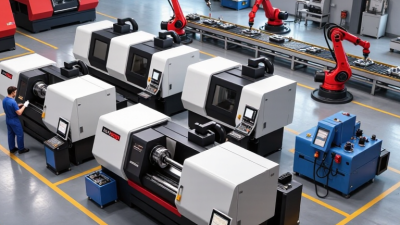
Choosing the best Machine Tools for 2026 is not simply a contest for the newest control or fastest spindle. The right choice depends on the work: materials, tolerances, batch sizes, floor space, and operator skills. A five-axis machining center may reduce setups for complex parts, while a reliable two-axis lathe can make more sense for repeat production. Small details matter. A warm spindle, a crowded tool magazine, or a difficult-to-read control can shape an entire shift.

Manufacturing expert Dr. Thomas R. Kurfess has studied advanced manufacturing and production systems. A fair paraphrase of his practical perspective is: “Start with the production challenge, then choose the technology.” That is not a verbatim quotation. It is a useful lens for comparing CNC mills, turning centers, Swiss-type lathes, grinding machines, and hybrid platforms. Look beyond brochure specifications. Check accuracy under real cutting conditions, automation compatibility, metrology, maintenance access, service support, and total operating cost. Ask for a test cut using your material and part geometry.

There is no universal winner. A machine that excels in a high-volume plant may burden a small job shop. In 2026, connected controls and automated loading will matter, but software cannot rescue a poor process. Nor should every shop chase lights-out production. This guide examines leading machine-tool categories, the strengths and trade-offs buyers should verify, and the questions worth asking before an investment. Some recommendations will remain imperfect; real production conditions are messier than rankings suggest.
What Are the Best Machine Tools for 2026?

How Machine Tools Are Defined and Classified

In manufacturing, a machine tool is a powered machine that shapes a workpiece through controlled cutting or forming. A lathe rotates the part while a cutting edge removes material. A milling machine moves a rotating cutter across it. Presses shape sheet metal through force. These examples show the main process-based classes: material removal and material forming. Additive and hybrid systems complicate the boundaries.

Classification also depends on motion, control, and workpiece size. A machine may be described by its number of controlled axes, manual or computer numerical control, and whether it handles turning, milling, grinding, or several operations. These labels help buyers compare capability, but they can overlap. The boundary gets messy. A hybrid machine may cut and add material in one setup. The International Federation of Robotics’ World Robotics 2024 report counted about 4.28 million industrial robots operating worldwide in 2023. That figure is not a machine-tool count; it shows why automation should be treated as a separate category, even when robots load or tend machine tools.

Classify the process first. Then check the machine’s axes, control system, and actual work envelope against the job. A label alone is not enough.

Which Performance Factors Matter Most in 2026

In 2026, machine-tool performance should be judged by what happens during a full shift, not just by a headline accuracy figure. Thermal stability matters: a spindle that warms unevenly can shift dimensions across a long production run. Heat matters. Ask for test results after warm-up, under representative cutting loads, and across repeated measurements.

Rigidity and vibration control affect surface finish, tool life, and cycle time. Listen for chatter during a demanding cut, then inspect the part rather than relying on a brochure. A specification sheet can still flatter a machine. Check positioning accuracy and repeatability with suitable measurement equipment, and compare results across the working area. Spindle speed is useful only when torque, bearings, and cutting conditions support the intended work.

Controls should make setup and recovery clear to operators, while tool changes and routine maintenance should be accessible without awkward reaching or long stoppages. Uptime depends on practical details: chip evacuation, coolant access, diagnostics, and the availability of trained service support. Energy use and automation compatibility also matter, especially where schedules vary. I would not treat any single score as decisive; real parts, real operators, and a representative trial often reveal weaknesses that a checklist misses.

What Are the Best Machine Tools for 2026?

Which performance factors matter most in 2026?

These relative priority scores are an editorial planning framework, not measured survey results or a universal ranking. Actual priorities depend on the workpiece, tolerances, production volume, and operating costs. Evaluate accuracy and repeatability alongside thermal stability, uptime, automation compatibility, and energy use.

How Leading Machine Tool Types Compare

Choosing the best machine tool for 2026 starts with the part, not the latest feature list. A five-axis machining center can cut complex housings in fewer setups, reducing handling and alignment errors. It also needs skilled programming and careful workholding. For flat components, a three-axis mill may be faster to set up and easier to maintain. More axes are not always better.

Turning centers suit shafts, pins, and other rotational parts. Live tooling can add milled features without moving a part to another machine, though it may increase programming demands. Grinders excel when a surface needs a fine finish or tight dimensional control. They remove material slowly, so using one for rough stock removal is often inefficient. Fit matters.

Electrical discharge machining handles intricate shapes in hard conductive materials, especially where a cutting tool cannot reach. It is typically slower than milling, and it only works with conductive materials. The practical comparison should include accuracy, cycle time, tooling, operator experience, and maintenance access. A machine that holds tolerance on the first shift but drifts after warm-up deserves a closer look. That detail is easy to miss. Real production trials, using representative materials and parts, can reveal the difference between a promising specification and a dependable process.

Where Each Machine Tool Excels in Practice

Choosing a machine tool for 2026 starts with the part, not the catalogue. A CNC mill handles rigid, prismatic components, such as a steel manifold with drilled ports. A lathe is better for shafts and sleeves, where concentricity matters. For thin sheet, laser cutting can create clean profiles without a punch tool. A grinder earns its place when a surface needs a fine finish or tight tolerance. Setup matters. A capable machine still struggles with poor fixturing or inconsistent material.

Automation changes the practical choice. IFR’s World Robotics 2024 report counted 4,281,585 industrial robots operating worldwide in 2023. That figure supports evaluating robot-ready CNC cells, especially for repeat production. It does not mean every shop needs a robot. Low-volume work may benefit more from a flexible mill and quick-change tooling. Additive manufacturing can suit complex, low-volume parts, but finishing and inspection still take time. The real trade-off is often less obvious than a machine’s advertised speed.

Tips: Match the tool to material, tolerance, batch size, and operator skill. Ask for a sample cut using your actual stock. Measure cycle time and finished-part quality, not just spindle speed. Keep a little skepticism: vendor demonstrations rarely include your awkward part, rushed setup, or worn fixture.

How to Select a Machine Tool for Specific Needs

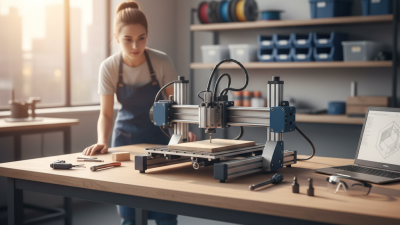
The best machine tool in 2026 is not necessarily the newest or most automated; it is the one that fits the work. Begin with the parts you actually make: material, largest dimensions, required tolerances, and weekly quantity. A small shop cutting aluminum brackets may need a compact mill with dependable spindle power, while long steel shafts call for suitable turning capacity and steady workholding. Write down the tightest tolerance and check whether it applies across the whole part or only a critical feature. Details matter.

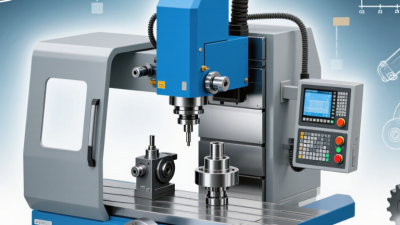
Match the machine type and capability to those requirements. Milling suits flat faces, pockets, and complex profiles; turning is efficient for round parts; grinding may be needed when surface finish or dimensional control exceeds ordinary cutting capability. Check spindle speed and torque for your materials, tool capacity, axis travel, and the space needed to load stock safely. Ask for a test cut in representative material, then measure the result with calibrated instruments. A specification sheet is not a part inspection. Measure twice.

Also price the full operating setup: tooling, workholding, extraction, power, software, training, and maintenance access. A cheaper machine can cost more if changeovers consume hours or local service is slow. This is easy to underestimate. If production volume may change, compare realistic cycle times rather than optimistic demonstrations, and leave room for future fixtures. I would still revisit the choice after a few months; actual scrap, setup time, and operator feedback sometimes contradict the spreadsheet. That uncertainty is useful, not a failure.

What Are the Best Machine Tools for 2026? How to Select a Machine Tool for Specific Needs

The best choice depends on part geometry, material, tolerances, production volume, and available skills. Use this comparison as a starting point, then verify specifications against the actual machine configuration and job requirements.

Machine tool Best suited for Typical strengths Key trade-offs Selection checks
CNC turning center Round parts such as shafts, pins, bushings, and threaded components. Efficiently turns cylindrical features; live tooling can add milling and drilling operations on some configurations. Less suitable for parts dominated by broad flat faces or complex freeform surfaces. Part length and diameter are limited by machine capacity. Check maximum turning diameter and length, bar capacity, spindle speed and power, tool stations, and whether a sub-spindle is needed.
3-axis vertical machining center Prismatic components, plates, housings, molds, and general-purpose milling. Versatile and widely used for facing, pocketing, drilling, and contouring; usually simpler to program and fixture than multi-axis systems. Multiple setups may be required to machine features on several sides, increasing handling time and the chance of setup-related error. Compare table size, travels, spindle power and speed, tool capacity, workholding options, and the number of faces that must be machined.
4-axis machining center Parts with features around a central axis, such as indexed faces, impellers, or components requiring rotary positioning. A rotary axis can expose multiple sides of a part without manual re-fixturing and can support coordinated rotary machining. Rotary-axis capacity and setup can limit part size; programming and collision checking are more involved than for basic 3-axis work. Confirm rotary-axis load, diameter and clearance limits, whether the rotary axis is indexed or simultaneous, and compatibility with the control and software.
5-axis machining center Complex aerospace, medical, turbine, mold, and die components with angled or contoured surfaces. Can approach a part from multiple directions in one setup, reduce fixture changes, and machine complex surfaces with coordinated axes. Higher purchase and operating costs; requires suitable programming, simulation, workholding, and operator expertise. It is not automatically faster for simple parts. Assess part geometry, work envelope, rotary-axis configuration, tool reach, machine accuracy, postprocessor support, and the cost of programming and training.
Swiss-type CNC lathe Small-diameter, long, slender precision parts produced in repeated quantities. A guide bushing supports the workpiece close to the cutting zone, helping control deflection on slender parts; multiple tools can perform operations in sequence. Setup and programming can be more specialized. It is generally a poor fit for large-diameter work or very low-volume jobs with frequent changes. Check bar diameter range, part length, guide-bushing requirements, number of tool stations, and expected annual volume.
Wire EDM Precise through-cuts, intricate profiles, and hard conductive materials that are difficult to machine conventionally. Uses electrical discharges rather than a cutting tool; can produce narrow slots and detailed profiles without conventional cutting forces. Only works on electrically conductive materials, and cutting is generally slower than many conventional roughing operations. It does not replace milling for every feature. Review workpiece height, required profile accuracy and surface finish, wire and flushing needs, and whether start holes or secondary operations are required.
Waterjet cutting system Cutting sheet, plate, and other stock where a narrow kerf and low heat input are useful. Cold-cutting process avoids a heat-affected zone typical of thermal cutting; can cut many materials when configured appropriately. Kerf taper, cutting speed, abrasive use, and edge finish vary with material thickness and process settings. It is not a substitute for precision machining of all finished features. Check material and thickness range, bed size, pump capacity, abrasive handling, edge-quality requirements, and tolerance needs.
Grinding machine Finishing hardened parts, precision diameters, flat surfaces, and components with demanding surface-finish requirements. Abrasive cutting can achieve fine finishes and close dimensional control when the machine, wheel, and process are properly selected. Usually best as a finishing process rather than a high-volume material-removal method; wheel selection, dressing, and process control are important. Identify the required geometry, material hardness, finish and tolerance targets, wheel type, workholding method, and coolant requirements.

Practical rule: Match the machine to the most demanding feature and the expected production mix, not just the most complex part. Confirm stated capacity, accuracy, and performance with the machine supplier for the exact configuration and operating conditions.